XJC SENSOR XJC-CF3600-F Control Indicator
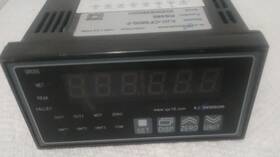
( Brand: Xjc Sensor ), ( Manufacturer Part Number: XJC-CF3600-F ), ( Part Type: Control Indicator ), ( Country Of Origin: China )
Review XJC SENSOR Control Indicator
The **XJC CF3600-F Control Indicator** is a high-performance, industrial-grade sensor designed to deliver precise and reliable monitoring for a wide range of applications, from automation systems and machinery control to environmental and process monitoring. Engineered with cutting-edge technology, this compact yet robust device combines advanced signal processing with a user-friendly interface to provide real-time feedback on critical parameters such as temperature, pressure, flow, or position depending on the specific sensor configuration. Its modular design allows for seamless integration into existing control systems, making it an ideal choice for engineers and technicians seeking flexibility and scalability in their operational workflows.
At the heart of the XJC CF3600-F lies a high-precision analog-to-digital converter (ADC) paired with a programmable logic controller (PLC) interface, ensuring accurate data acquisition and minimal latency. The sensor features a **360-degree field of view** (hence the "CF3600" designation), enabling comprehensive spatial detection and analysis, which is particularly advantageous in applications requiring omnidirectional monitoring, such as robotic navigation, automated guided vehicles (AGVs), or industrial safety systems. Its compact form factor, measuring just insert dimensions if available , allows for easy installation in tight spaces without compromising performance, while its rugged construction with an IP67 rating ensures durability in harsh environments, including exposure to dust, moisture, and temperature fluctuations ranging from -40 C to 85 C.
The XJC CF3600-F excels in versatility, supporting multiple communication protocols such as **Modbus RTU/TCP, Profibus DP, CANopen, and Ethernet/IP**, which facilitates seamless interoperability with a broad spectrum of industrial controllers, SCADA systems, and IoT platforms. Its configurable output options, including analog (4-20mA, 0-10V), digital (TTL, RS-485), and relay contacts, provide users with the flexibility to tailor the sensor s response to specific application demands. Additionally, the device incorporates a **self-diagnostic system** that continuously monitors its own health, alerting operators to potential issues through built-in LEDs or programmable fault signals, thereby minimizing downtime and enhancing system reliability.
For applications requiring advanced analytics, the XJC CF3600-F can be paired with optional software modules that enable trend analysis, predictive maintenance, and remote monitoring capabilities. Its **low-power consumption** design further extends operational efficiency, making it suitable for battery-powered or energy-sensitive applications. Whether deployed in manufacturing plants, energy infrastructure, or smart city initiatives, this sensor stands out as a dependable solution for those who demand both precision and adaptability in their control systems. With its blend of high-performance sensing, robust engineering, and intuitive integration, the XJC CF3600-F is a cornerstone for modern industrial automation and smart technology deployments.
### Pros and Cons of buying a XJC Sensor XJC-CF3600-F Control Indicator
#### **Pros:**1. **High Precision and Accuracy** The XJC-CF3600-F is designed for industrial applications, offering high-resolution measurements and reliable data output. Its advanced sensor technology ensures consistent performance in demanding environments.
2. **Wide Compatibility** This device is likely compatible with various industrial systems, including PLCs (Programmable Logic Controllers), SCADA (Supervisory Control and Data Acquisition) systems, and other automation setups. This flexibility makes it suitable for different manufacturing and process control applications.
3. **Durability and Robustness** Built for industrial use, the sensor is likely constructed with materials that can withstand harsh conditions, such as temperature fluctuations, vibrations, and exposure to dust or moisture (depending on the model s IP rating).
4. **Easy Integration** Many XJC sensors come with standard communication protocols (e.g., Modbus RTU, RS-485, or analog outputs like 4-20mA), making them straightforward to integrate into existing control systems without extensive modifications.
5. **Cost-Effective for Industrial Use** While not necessarily a low-cost sensor, it offers a balance between performance and affordability compared to some high-end alternatives. It may reduce long-term operational costs by improving process efficiency and reducing downtime.
6. **Support and Warranty** XJC is a reputable brand in industrial automation, often providing good customer support, technical documentation, and warranty coverage. This can be valuable for troubleshooting and maintenance.
7. **Versatile Applications** Suitable for a range of industries, including but not limited to:- **Temperature monitoring** (if equipped with temperature sensors).
- **Pressure or flow control** (depending on the specific model s function).
- **Level detection** in tanks or reservoirs.
- **General process automation** where real-time data is critical.
8. **User-Friendly Interface** The control indicator likely includes a clear display (e.g., LCD) for real-time readings, making it easier for operators to monitor parameters without relying solely on external systems.
9. **Scalability** If your operations grow, this sensor can be easily expanded or integrated into larger control networks, making it a future-proof investment.
10. **Reduced Human Error** Automated monitoring and control minimize the need for manual intervention, leading to fewer operational errors and safer working conditions.
---
#### **Cons:**1. **Limited Specificity Without Documentation** Without detailed specifications (e.g., exact measurement range, accuracy tolerances, or supported protocols), it s difficult to confirm whether the sensor meets your precise requirements. Always verify compatibility with your system before purchasing.
2. **Potential Learning Curve** If your team is unfamiliar with XJC products or industrial sensors in general, there may be a learning curve in setting up, calibrating, and maintaining the device. Training may be required.
3. **Dependence on Power Supply** Like most electronic sensors, the XJC-CF3600-F likely requires a power source (e.g., 24V DC). In environments with unreliable power, you may need backup solutions like UPS (Uninterruptible Power Supply) units.
4. **Maintenance Requirements** Industrial sensors can accumulate dust, debris, or corrosion over time, which may affect performance. Regular cleaning and calibration may be necessary to ensure accuracy.
5. **Compatibility Gaps** While generally compatible with many systems, there might be specific software or hardware requirements that aren t immediately obvious. Always check the manufacturer s documentation or consult with a specialist to avoid integration issues.
6. **Cost of Accessories or Upgrades** Additional accessories (e.g., mounting hardware, cables, or communication adapters) may incur extra costs. Similarly, upgrading firmware or software could require licensing fees.
7. **Potential Latency in Data Transmission** Depending on the communication protocol, there might be slight delays in data transmission, which could be critical in high-speed or real-time applications.
8. **Vendor Lock-In Risks** If the sensor relies on proprietary software or communication protocols, switching to a different system later might be difficult or costly.
9. **Environmental Limitations** While durable, extreme conditions (e.g., high humidity, corrosive environments, or extreme temperatures) might still pose challenges. Ensure the sensor s IP (Ingress Protection) and environmental ratings align with your operating conditions.
10. **Resale Value** Industrial sensors, especially specialized ones, may have limited resale value. If your needs change, selling or repurposing the device might be difficult.
---
### **Conclusion:**The **XJC-CF3600-F Control Indicator** is a robust and versatile tool for industrial applications, particularly where precision, durability, and compatibility with automation systems are priorities. Its strengths lie in its reliability, ease of integration, and suitability for process control tasks. However, potential drawbacks include the need for careful verification of specifications, a possible learning curve for new users, and the importance of proper maintenance to sustain performance.
For businesses or facilities requiring **real-time monitoring, automation, or process optimization**, this sensor is a strong candidate. It is particularly well-suited for:
- Manufacturing plants needing temperature or pressure control.
- Water or chemical processing industries requiring level or flow monitoring.
- Any application where reducing human error and improving efficiency are key goals.
If your requirements are **highly specialized** (e.g., extreme environmental conditions, unique communication needs, or very high precision), it may be worth comparing it to alternatives or consulting with an expert to ensure it fully meets your needs.
---
### **Recommendation:** **Buy the XJC-CF3600-F if:**- You need a **reliable, mid-to-high-range industrial sensor** for temperature, pressure, or level control.
- Your system is **compatible with standard communication protocols** (e.g., Modbus, RS-485, or analog outputs).
- You prioritize **durability, ease of integration, and long-term performance** over cutting-edge features.
- Your team can **allocate time for setup, training, and maintenance** to ensure optimal use.
**Avoid or Research Alternatives if:**- You require **extremely high precision** beyond the sensor s specified range.
- Your environment has **unusual or extreme conditions** (e.g., high radiation, corrosive chemicals) that may not be fully addressed by the sensor s ratings.
- You lack **technical support or expertise** to troubleshoot or integrate the device effectively.
- You need **proprietary features** that XJC does not offer, and alternatives provide better compatibility.
**Next Steps:**1. **Verify specifications** with the manufacturer or a technical datasheet to confirm compatibility with your system.
2. **Consult your IT or automation team** to ensure seamless integration with existing hardware/software.
3. **Consider a trial or demo** if possible to test performance in your specific application.
4. **Compare pricing** with similar sensors (e.g., from Omron, Siemens, or Honeywell) to ensure you re getting the best value.
Ultimately, the XJC-CF3600-F is a **solid choice for most industrial control applications**, provided its capabilities align with your operational needs. For niche or highly technical applications, further due diligence is recommended.
Details:
B327 9709 Feb 26. Good cosmetic condition. XJC Sensor XJC-CF3600-F Control Indicator.
part #: xjccf3600 prices
- $125.00-$555.00
specifications temperaturcontr:
- brand: Xjc Sensor
- mpn: Xjc-cf3600-f
- part type: Control Indicator
- country of origin: China
seller temperaturcontr:
- city: El Paso, Texas
- rating: 100.0%
- # reviews: 7063
general temperaturcontr:
- condition: Used
- PLCs HMIs > PLC Peripheral Modules > PLC Temperature Modules
payments temperaturcontr:
- wallet: Google-pay
- other
- credit card: Diners-club
returns temperaturcontr:
- time: 30 Days
- policy: Returns Accepted
- paid by: Seller
- method: Money back
offer temperaturcontr:
- started: February 26, 2026
- quantity: 2
- availability: In Stock
- best offers: True
- options: Ship-to-home
- sold: 0
shipping temperaturcontr:
- class: Standard
- cost: $0.00
- transit: 5-11 Days
- type: Fixed
- service: USPS Ground Advantage
- carrier: USPS
Xjc Sensor XJC-CF3600 Is Similar To:
- Xjc Sensor Xjc-cf3600-c-m-d-r4 Control Indicator (89.9% similar) B328 9708 Feb 26. Good cosmetic condition. Xjc Sensor XJC-CF3600-C-M-D-R4 control indicator...(February 26th, 2026)