AUTONICS TCN4L-24R Digital Temperature Controller Module Tc Rtd
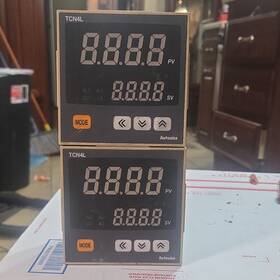
( Brand: Autonics ), ( Manufacturer Part Number: TCN4L-24R ), ( Part Type: Digital Controller Module ), ( Sensor Type: Tc, Rtd )
Review AUTONICS Digital Temperature Controller Module Tc Rtd
The **Autonics TCN4L-24R Digital Temperature Controller Module** is a high-performance, versatile industrial-grade device designed to deliver precise and reliable temperature control for a wide range of applications, from HVAC systems and process automation to industrial machinery and environmental monitoring. Engineered with Autonics reputation for robust engineering and user-friendly operation, this compact yet powerful module combines advanced digital control technology with a rugged, modular design to ensure seamless integration into virtually any automation setup. Featuring a **TC-RTD (Platinum Resistance Thermometer) input**, the TCN4L-24R excels in measuring temperature with exceptional accuracy, typically within 0.5 C over its full operating range, making it ideal for applications where precision is critical. The module operates on a **24V DC power supply**, providing stable performance while minimizing energy consumption, and its **relay output** (with a contact rating of 2A/250V AC or 2A/30V DC) allows for direct control of heating or cooling elements, actuators, or other low-power loads without the need for additional relays or interfaces.
What sets the TCN4L-24R apart is its **intuitive LCD display and keypad interface**, which simplifies setup, monitoring, and troubleshooting by offering real-time temperature readings, setpoint adjustments, and programmable control modes including PID (Proportional-Integral-Derivative) regulation for dynamic process control. The device supports **dual setpoint control**, enabling users to configure two distinct temperature thresholds for applications requiring bi-level or differential control, such as freeze protection, temperature cycling, or safety interlocks. Additionally, the module includes **alarm outputs** (open-collector or relay-driven) to signal deviations from setpoints, ensuring proactive intervention in critical systems. Built to withstand harsh industrial environments, the TCN4L-24R is housed in a **durable metal enclosure** with an IP65 rating, protecting it from dust, moisture, and mechanical stress while maintaining reliable operation in temperatures ranging from -10 C to 60 C.
Beyond its technical specifications, the TCN4L-24R stands out for its **flexibility and scalability**, offering compatibility with various communication protocols such as **Modbus RTU** for seamless integration into larger automation networks. This feature allows engineers to monitor and control the device remotely via PLCs, SCADA systems, or industrial PCs, enhancing overall system efficiency and reducing manual intervention. The module s **configurable parameters**, including hysteresis, ramp/soak times, and output delay settings, further customize its performance to match specific application requirements, whether for precise laboratory conditions, industrial drying processes, or climate-controlled storage. With its blend of **high accuracy, ease of use, and industrial durability**, the Autonics TCN4L-24R Digital Temperature Controller Module is an indispensable tool for professionals seeking a dependable, all-in-one solution for temperature regulation in demanding environments.
### **Pros and Cons of buying a Autonics TCN4L-24R Digital Temperature Controller Module (TC, RTD)**
#### **Pros**
1. **High Precision and Reliability** The TCN4L-24R is designed for industrial applications, offering accurate temperature control with minimal drift over time. It supports both thermocouple (TC) and RTD (Resistance Temperature Detector) inputs, making it versatile for different sensing needs.
2. **Modular and Expandable** The module is part of Autonics modular control system, allowing for easy integration with other PLCs or control units. It supports communication protocols like Modbus RTU, which simplifies data logging and remote monitoring.
3. **Wide Input Range** Compatible with multiple thermocouple types (e.g., K, J, T, E, N, S, R, B) and RTD sensors (Pt100, Pt500, Pt1000), making it suitable for various temperature measurement applications, from low-temperature processes to high-temperature environments.
4. **Relay Outputs for Direct Control** Features two relay outputs (24V DC or 24V AC) for direct control of heating or cooling elements, such as furnaces, ovens, or chillers, without requiring additional drivers.
5. **User-Friendly Interface** Includes a built-in LCD display for local monitoring and adjustment, along with programmable setpoints, PID tuning, and alarm limits. The interface is intuitive for basic setup and troubleshooting.
6. **Industrial-Grade Durability** Built to withstand harsh environments, with protection against voltage spikes, overloads, and temperature fluctuations, ensuring long-term reliability in industrial settings.
7. **Energy Efficiency** Advanced PID control algorithms help optimize heating/cooling cycles, reducing energy waste and improving process efficiency.
8. **Compliance with Standards** Meets industrial safety and performance standards, making it suitable for applications in manufacturing, food processing, pharmaceuticals, and HVAC systems.
---
#### **Cons**
1. **Limited Communication Protocols** While it supports Modbus RTU, it lacks more advanced protocols like Profibus, Ethernet/IP, or CANbus, which may require additional gateways for integration with modern SCADA systems.
2. **No Built-in Logging** Unlike some higher-end controllers, the TCN4L-24R does not include internal data logging. Users must rely on external devices or third-party software to record temperature trends over time.
3. **Basic PID Tuning** While PID control is included, advanced tuning features (such as auto-tuning or adaptive control) are not available, which may require manual optimization for complex processes.
4. **Physical Size and Installation Space** As a standalone module, it occupies space in a control panel or enclosure. For compact systems, this may be a drawback compared to integrated PLC-based solutions.
5. **No Wireless Connectivity** Unlike newer controllers, it does not support wireless communication (e.g., Wi-Fi, Bluetooth, or cellular), limiting remote access options.
6. **Learning Curve for Advanced Users** While the interface is user-friendly for basic operations, configuring complex control logic or troubleshooting advanced issues may require familiarity with industrial automation principles.
7. **Cost Relative to Alternatives** For applications requiring extensive communication or advanced features, the TCN4L-24R may be more expensive than simpler analog controllers or basic PLC modules.
---
### **Conclusion**
The **Autonics TCN4L-24R** is a robust and reliable digital temperature controller well-suited for industrial applications requiring precise temperature control with thermocouple or RTD sensors. Its strengths lie in its accuracy, modularity, and direct relay outputs, making it ideal for processes where simplicity and reliability are prioritized over advanced connectivity or logging.
However, its limitations such as the lack of built-in logging, limited communication options, and absence of wireless connectivity may make it less ideal for applications demanding real-time remote monitoring, extensive data recording, or integration with modern IoT systems. If these features are critical, pairing it with a PLC or a gateway for additional functionality may be necessary.
### **Recommendation**
- **Buy the TCN4L-24R if:**- You need a **standalone, precise temperature controller** for industrial processes (e.g., furnaces, ovens, or chemical reactors).
- You require **direct relay outputs** for simple on/off or PID control without complex programming.
- Your system primarily uses **thermocouples or RTDs** and does not require advanced communication protocols.
- Budget constraints favor a **cost-effective, modular solution** over a fully integrated PLC.
- **Consider Alternatives if:**- You need **real-time data logging, remote monitoring, or cloud connectivity** in which case a PLC with built-in logging (e.g., Allen-Bradley Micro800, Siemens LOGO!) or a controller with Ethernet support (e.g., Omron CJ2M) may be better.
- Your application requires **wireless control or IoT integration**, as the TCN4L-24R lacks these features.
- You anticipate **future scalability** and may need more advanced control logic, in which case a programmable PLC would be more flexible.
For most **basic to moderately complex industrial temperature control tasks**, the TCN4L-24R remains a solid choice due to its reliability and ease of use. However, for applications demanding higher levels of automation or connectivity, evaluating additional components or controllers may be worthwhile.
Details:
Autonics TCN4L-24R Digital Temperature Controller Module TC RTD.
part #: tcn4l24r prices
- $73.03-$131.88
specifications temperaturcontr:
- brand: Autonics
- mpn: Tcn4l-24r
- part type: Digital Controller Module
- sensor type: Tc, Rtd
seller temperaturcontr:
- city: Smithville, Texas
- # reviews: 0
- rating: 0.0%
returns temperaturcontr:
- policy: No Returns
general temperaturcontr:
- PLCs HMIs > PLC Peripheral Modules > PLC Temperature Modules
- condition: Used
shipping temperaturcontr:
- carrier: USPS
- cost: $5.52
- service: USPS Ground Advantage
- transit: 6-11 Days
- class: Standard
- type: Calculated
payments temperaturcontr:
- other
- credit card: Mastercard
- wallet: Paypal
offer temperaturcontr:
- options: Ship-to-home
- started: March 11, 2026
- sold: 0
- availability: In Stock
- best offers: True
- quantity: 1
Autonics TCN4L-24R Is Similar To:
- 21hj30 Autonics Temperature Controller (61.4% similar) 5 percent or 1c 1DIGIT, out of range room temperature. 0C, proportional band. 9C, setting accuracy at room temp. 23C 5c PVC there are no complex discount structures to understand. 89, depth in. Item image may not completely reflect the accuracy of purchased. Small businesses have historically been ...(July 28th, 2017)
- 21hj35 Autonics Temperature Controller (61.4% similar) 1 to small businesses have historically been at a disadvantage larger companies who can buy stuff lower prices because of their size. 5 percent or -1C. 0C, proportional band. 42CONTROL mode on off or p,pi,pd,paid, control period. Temperature controller, digital, Thermopylae, platinum rtd sensor type...(December 8th, 2017)
- 21hj38 Autonics Temperature Controller (61.4% similar) 5 percent or -1C. 1 to 100C, proportional band. 34, width in. Hysteresis 1 to 100C sec. Temperature controller, digital, Thermopylae, platinum rtd sensor type, input voltage 24VDC, length in. There are no complex discount structures to understand item image may not completely reflect the ...(August 18th, 2017)
- 21hj48 Autonics Temperature Controller (61.4% similar) 78, depth in. 0C, proportional band. Percent, setting accuracy f there are no complex discount structures to understand. 1 to small businesses have historically been at a disadvantage larger companies who can buy stuff lower prices because of their size. Temperature controller, digital, Thermopylae...(July 29th, 2017)
- 21hj49 Autonics Temperature Controller (61.4% similar) Small businesses have historically been at a disadvantage to larger companies who can buy stuff lower prices because of their size. 0C, proportional band. Item image may not completely reflect the accuracy of purchased. 05CONTROL mode on off or p,pi,pd,pdif, pods, control period 1 to 120 sec ...(July 29th, 2017)
- 21hj36 Autonics Temperature Controller (61.4% similar) Whether you want to buy one or one thousand. Include a copy of the original order confirmation or packing slip with your ra paperwork as proof of purchase. We help small business stay competitive. Return documentation should clearly specify credit or exchange. There are no complex discount ...(March 21st, 2016)
- 21hj52 Autonics Temperature Controller (61.4% similar) Hysteresis 1 to 100C. Expedited shipping is not available for third party items. Whether you want to buy one or one thousand. There are no complex discount structures to understand and no hidden costs. Any charges incurred for hazardous materials or other special handling by the carrier must be paid...(July 10th, 2016)
- T3s-b4rj8f Autonics Temperature Controller Model Sensor 0-799f Out Relay (57.8% similar) Temperature controller model T3S B4RJ8F sensor j ic range 799F out relay power 100 240VAC...(October 8th, 2016)
- W48xh24mm M4ns-na Autonics Meter Digital Scaling Led 4 Digit 4-20 Ma Inp (37% similar) Meter, digital scaling, led, W48XH24MM, 4 digit, 4/2 0 ma input, loop powered...(May 19th, 2016)
- Mt4w-aa-41 Autonics Digital Multi Panel Meter Input (43.9% similar) This series is the super version of panel meter which realizes to 9999 max display range, wide power supply range and various output option selection. In addition, qualifying electric test product orders are shipped free. Speak with an agent today. Equipment provides electrical testing equipment and...(July 12th, 2018)
- Mt4w-av-41 Autonics Digital Multi Panel (41.2% similar) Equipment provides electrical testing equipment and products for a wide range of applications. This series is the super version of panel meter which realizes to 9999 max display range, wide power supply range and various output option selection. Autonics panel meters MT4W series MT4Y meter multi has...(October 28th, 2017)