CHENG KE KL-003 Temperature Controller Deg
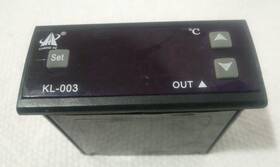
( Brand: Cheng Ke ), ( Manufacturer Part Number: KL-003 ), ( Part Type: Controller ), ( Country Of Origin: China )
Review CHENG KE Temperature Controller Deg
The **Cheng Ke KL-003 Temperature Controller** is a high-performance, precision-engineered device designed to deliver reliable and accurate temperature regulation for a wide range of industrial, laboratory, and commercial applications. Built with a robust and compact design, this digital temperature controller combines advanced functionality with user-friendly operation, making it an ideal choice for professionals who demand both efficiency and dependability. The KL-003 features a high-precision **PID (Proportional-Integral-Derivative) control algorithm**, ensuring smooth and stable temperature regulation with minimal overshoot and fast response times, even in demanding environments. Its **large, backlit LCD display** provides clear visibility of real-time temperature readings, setpoints, and control parameters, while intuitive navigation via the front-panel buttons allows for effortless adjustments and configuration.
This temperature controller is equipped with **dual relay outputs**, accommodating a variety of heating and cooling systems, including resistance heaters, Peltier modules, and other actuators, making it versatile for applications such as ovens, incubators, chemical reactors, and thermal testing equipment. The KL-003 also includes **four configurable input channels**, allowing for the monitoring of multiple temperature sensors (such as K-type, J-type, T-type thermocouples, or RTDs) simultaneously, which enhances its adaptability for complex systems requiring multi-point control. Additionally, the device supports **remote sensing**, ensuring accurate temperature measurement at the process point rather than at the controller location, thereby eliminating errors caused by thermal gradients.
Safety and reliability are paramount in the KL-003 s design, featuring **overheat protection, short-circuit protection, and overload protection** to safeguard both the controller and connected equipment from potential damage. The controller also includes **alarm outputs** (relay or optocoupler) to signal deviations from setpoints, enabling proactive intervention and minimizing downtime. For enhanced data management, the KL-003 offers **RS-485 communication interface**, supporting Modbus RTU protocol, which allows for seamless integration with PLCs, SCADA systems, or other industrial networks, facilitating centralized monitoring and control. This makes it particularly suitable for automated production lines, research laboratories, and large-scale industrial processes where real-time data logging and remote management are essential.
The KL-003 is constructed with high-quality materials, ensuring durability and resistance to environmental factors such as dust, moisture, and temperature fluctuations, making it suitable for both indoor and outdoor installations in controlled or harsh environments. Its **wide operating temperature range** (typically -20 C to 70 C) further expands its applicability across diverse settings. Whether used in **pharmaceutical manufacturing, food processing, material testing, or HVAC systems**, the Cheng Ke KL-003 delivers precise, consistent, and efficient temperature control, empowering users to achieve optimal performance with confidence. With its blend of advanced technology, flexibility, and reliability, this temperature controller stands as a versatile and indispensable tool for professionals seeking dependable thermal management solutions.
The Cheng Ke KL-003 is a temperature controller designed for industrial and laboratory applications, particularly for processes requiring precise temperature regulation. Below is a detailed breakdown of its pros and cons, followed by a conclusion and recommendation.
---
### **Pros of the Cheng Ke KL-003 Temperature Controller**
1. **Precision and Accuracy**
The KL-003 is known for its high precision in temperature control, typically offering accuracy within 0.1 C or better, depending on the model variant. This makes it suitable for applications where fine temperature adjustments are critical, such as in chemical reactions, fermentation, or material testing.
2. **Wide Temperature Range**
It supports a broad operating range, often from -50 C to 300 C or higher, depending on the sensor and configuration. This versatility allows it to be used in diverse environments, from cryogenic cooling to high-temperature processes.
3. **Multiple Control Modes**
The controller supports various control modes, including PID (Proportional-Integral-Derivative), two-step control, and relay control. This flexibility enables users to tailor the control algorithm to their specific application, improving efficiency and stability.
4. **User-Friendly Interface**
The KL-003 typically features a clear LCD display with intuitive navigation using buttons or a touchscreen (depending on the model). This makes it accessible for operators with varying levels of technical expertise.
5. **Relay and Output Options**
It often includes multiple relay outputs (e.g., 2, 4, or 6 channels) and analog outputs (e.g., 4-20mA), allowing for integration with heating elements, cooling systems, or other actuators. This modularity enhances its adaptability to different setups.
6. **Remote Monitoring and Control**
Some advanced versions of the KL-003 support RS-485 or Modbus communication protocols, enabling remote monitoring and control via a PC or PLC. This is beneficial for industrial automation and data logging.
7. **Durability and Reliability**
Cheng Ke products are generally built to withstand harsh environments, with robust enclosures and components that reduce the risk of failure over time. This makes it a reliable choice for continuous operation.
8. **Cost-Effective for Mid-Range Applications**
Compared to high-end industrial controllers, the KL-003 offers a balance between performance and cost, making it a practical option for small to medium-scale applications where budget constraints exist.
9. **Compatibility with Various Sensors**
It can interface with a wide range of temperature sensors, including thermocouples (e.g., K-type, J-type), RTDs (e.g., Pt100), and thermistors. This compatibility ensures flexibility in sensor selection based on the application s requirements.
10. **Energy Efficiency**
The PID control algorithm helps optimize energy usage by minimizing unnecessary heating or cooling cycles, which can reduce operational costs over time.
---
### **Cons of the Cheng Ke KL-003 Temperature Controller**
1. **Limited Advanced Features**
Compared to more sophisticated controllers (e.g., some PLC-based systems or smart controllers with AI integration), the KL-003 lacks advanced features such as self-tuning PID, predictive control, or extensive data analytics. Users requiring cutting-edge functionality may need to upgrade.
2. **Software Dependencies**
Some advanced features (e.g., communication protocols or custom programming) may require proprietary software from Cheng Ke. This can create dependencies on the manufacturer for updates or troubleshooting, which might not be ideal for all users.
3. **Potential Learning Curve**
While the interface is user-friendly, mastering advanced control modes (e.g., optimizing PID parameters) may require some technical knowledge. Operators without prior experience may need training to fully utilize the controller s capabilities.
4. **Limited Customization for Complex Systems**
For highly complex processes with multiple interacting variables (e.g., multi-zone temperature control or advanced feedback loops), the KL-003 may lack the flexibility to handle such intricacies without additional hardware or software.
5. **Dependence on Sensor Quality**
The accuracy and reliability of the controller are directly tied to the quality of the connected sensor. A low-quality or improperly calibrated sensor can compromise the overall performance of the system.
6. **No Built-in Data Logging (in Basic Models)**
Basic versions of the KL-003 may not include built-in data logging capabilities. Users requiring detailed historical records may need to invest in additional logging devices or rely on external software for data collection.
7. **Physical Size and Installation Constraints**
The controller s size and mounting requirements may not suit compact or space-constrained environments. Users in tight spaces may need to consider alternative models or custom mounting solutions.
8. **Limited Warranty or Support for Older Models**
Depending on the model and region, Cheng Ke s warranty and technical support for older or discontinued versions of the KL-003 may be less robust compared to newer products. This could pose challenges for long-term maintenance.
9. **Potential for Overheating in High-Demand Applications**
In applications with extreme or rapid temperature changes, the controller s internal components may experience stress. While Cheng Ke products are generally durable, prolonged exposure to such conditions could reduce lifespan.
10. **Compatibility Issues with Non-Standard Systems**
Users working with non-standard or legacy systems may encounter compatibility issues, particularly with communication protocols or power supply requirements. Pre-installation testing is advisable.
---
### **Conclusion**
The Cheng Ke KL-003 temperature controller is a versatile and reliable tool for applications requiring precise temperature control within a moderate to high range. Its strengths lie in its accuracy, flexibility in control modes, user-friendly interface, and cost-effectiveness, making it suitable for laboratories, small-scale industrial processes, and educational settings. However, its limitations such as the lack of advanced features, potential software dependencies, and reliance on sensor quality may necessitate additional investments or workarounds for complex or high-demand applications.
For users prioritizing simplicity, cost efficiency, and basic to intermediate temperature control, the KL-003 is an excellent choice. Those requiring advanced automation, extensive data logging, or integration with sophisticated systems may need to explore higher-end alternatives or complementary hardware.
---
### **Recommendation**
1. **For Laboratories or Small-Scale Industrial Use:**The KL-003 is highly recommended if your application involves precise temperature control within its supported range, such as chemical synthesis, fermentation, or material testing. Ensure compatibility with your sensors and actuators, and consider investing in a model with RS-485 or Modbus support if remote monitoring is needed.
2. **For Budget-Conscious Users:**If cost is a primary concern and your application does not require advanced features, the KL-003 offers a compelling balance between performance and affordability. Pair it with high-quality sensors and consider adding a data logger if historical records are essential.
3. **For Complex or Large-Scale Applications:**If your process involves multi-zone control, predictive algorithms, or extensive automation, supplement the KL-003 with additional hardware (e.g., PLCs, smart sensors) or explore more advanced controllers. Conduct thorough testing to ensure compatibility with your existing infrastructure.
4. **For Users Requiring Long-Term Reliability:**Verify the availability of warranty support and spare parts for your specific model. If you anticipate using the controller for extended periods, check Cheng Ke s support policies or consider purchasing from a distributor with robust after-sales service.
5. **For Beginners:**The KL-003 s intuitive interface makes it a good starting point for users new to temperature control. However, allocate time to familiarize yourself with its features, particularly the PID tuning process, to achieve optimal performance.
Ultimately, the KL-003 is a strong contender for mid-range temperature control needs, provided its limitations are acknowledged and addressed through careful planning and complementary solutions. Always conduct a pilot test or consult with Cheng Ke s technical support to ensure it meets your specific requirements.
Details:
Good cosmetic condition. B328 9725 Feb 26. Cheng Ke KL-003 Temperature controller deg C.
part #: kl003 price
- $55.00
specifications temperaturcontr:
- brand: Cheng Ke
- mpn: Kl-003
- part type: Controller
- country of origin: China
payments temperaturcontr:
- wallet: Google-pay
- credit card: Discover
- other
shipping temperaturcontr:
- transit: 5-11 Days
- carrier: USPS
- type: Fixed
- class: Standard
- service: USPS Ground Advantage
- cost: $0.00
general temperaturcontr:
- condition: Used
- PLCs HMIs > PLC Peripheral Modules > PLC Temperature Modules
offer temperaturcontr:
- best offers: True
- sold: 0
- started: February 26, 2026
- availability: In Stock
- quantity: 1
- options: Ship-to-home
returns temperaturcontr:
- paid by: Seller
- method: Money back
- policy: Returns Accepted
- time: 30 Days
seller temperaturcontr:
- city: El Paso, Texas
- rating: 100.0%
- # reviews: 7063