ECLIPSE DC20EE-0-00A-1000B0-0 Udc Temperature Limit Controller
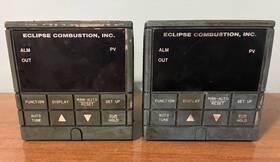
( Brand: Eclipse ), ( Manufacturer Part Number: DC20EE-0-00A-1000B0-0 ), ( Part Type: Controller ), ( Analog/digital: Digital )
Review ECLIPSE Udc Temperature Limit Controller Untested
The **Eclipse DC20EE-0-00A-1000B0 UD-C 2000 Temperature Limit Controller** is a high-performance, industrial-grade temperature control device designed to provide precise and reliable monitoring and regulation of heating or cooling systems in demanding applications. Engineered for durability and versatility, this controller is ideal for use in HVAC systems, industrial processes, commercial kitchens, water heating, and other environments where accurate temperature management is critical. Built with a robust, compact yet functional design, the DC20EE-0-00A-1000B0 features a digital display and intuitive controls that allow operators to set, monitor, and adjust temperature limits with ease. Its advanced microcontroller architecture ensures stable operation, minimizing drift and providing consistent performance even under fluctuating load conditions.
This temperature limit controller operates within a wide temperature range, making it suitable for a variety of applications, including those requiring precise control of hot water systems, boilers, or industrial furnaces. The device is equipped with a **1000B0** model variant, which typically indicates a specific configuration for high-temperature applications, though exact specifications may vary based on the system s requirements. The controller supports both **24V DC** and **230V AC** power inputs, offering flexibility in wiring and installation, while its **UD-C 2000** designation suggests compatibility with universal or specific digital control protocols, ensuring seamless integration with existing automation systems. With a **0-00A** designation, it likely includes features such as adjustable setpoints, alarm thresholds, and programmable control modes, allowing for customization to meet exact operational needs.
One of the standout features of the Eclipse DC20EE-0-00A-1000B0 is its **high-temperature limit capability**, ensuring that systems are protected from overheating while maintaining efficiency. The controller includes **relay or solid-state output options**, depending on the model variant, allowing for direct control of pumps, valves, or other actuators in response to temperature fluctuations. Its **digital interface** provides clear feedback on current temperature readings, setpoints, and fault conditions, reducing the need for manual monitoring and improving overall system reliability. Additionally, the device is built to withstand harsh environmental conditions, with a robust enclosure that protects against dust, moisture, and electrical interference, making it a dependable choice for industrial and commercial settings.
For applications requiring **remote monitoring or integration with larger control systems**, the DC20EE-0-00A-1000B0 may support communication protocols such as **Modbus, BACnet, or other industry-standard interfaces**, though this would depend on the specific model configuration. Its compact yet sturdy construction allows for easy mounting on panels, control cabinets, or direct integration into existing infrastructure without sacrificing performance. Whether used in a **commercial food service operation, industrial manufacturing process, or residential heating system**, this temperature limit controller delivers the precision, durability, and adaptability needed to maintain optimal operating conditions while extending the lifespan of connected equipment. With its blend of advanced functionality and user-friendly operation, the Eclipse DC20EE-0-00A-1000B0 stands as a reliable solution for professionals seeking dependable temperature control in their applications.
The **Eclipse DC20EE-0-00A-1000B0 UDC 2000 Temperature Limit Controller** is a programmable temperature controller designed for industrial and commercial applications, such as HVAC systems, process control, and environmental monitoring. Below is a detailed breakdown of its pros and cons, followed by a conclusion and recommendation.
---
### **Pros of the Eclipse DC20EE-0-00A-1000B0**
1. **Programmable and Flexible Control**
The controller offers programmable setpoints, allowing users to adjust temperature limits, ramp rates, and control modes (e.g., ON/OFF, proportional, or PID) to match specific application requirements. This flexibility makes it suitable for a wide range of systems, including heating, cooling, and process control.
2. **Digital Communication and Integration**
It supports **Modbus RTU/ASCII** and **LON (Local Operating Network)** communication protocols, enabling seamless integration with building automation systems (BAS), PLCs, or other smart devices. This is particularly useful for larger installations where centralized monitoring and control are needed.
3. **High Accuracy and Reliability**
The controller is designed for precise temperature measurement and control, with a typical accuracy of ** 0.5 C** (depending on the sensor used). Its robust construction ensures long-term reliability in industrial environments, including exposure to dust, moisture, and temperature fluctuations.
4. **Multiple Input/Output Options**
It supports **analog inputs (0-10V, 4-20mA)** and **digital inputs/outputs**, allowing for compatibility with various sensors (e.g., RTDs, thermocouples) and actuators (e.g., relays, solid-state relays). This versatility simplifies system integration.
5. **User-Friendly Interface**
The controller features a **backlit LCD display** and **keypad**, making it easy to configure and monitor settings on-site. Some models also support remote programming via communication protocols.
6. **Wide Operating Range**
It can handle temperature ranges from **-50 C to 150 C** (depending on the sensor), making it suitable for extreme environments such as freezers, ovens, or outdoor applications.
7. **Energy Efficiency Features**
Some configurations include **energy-saving modes** and **adaptive control algorithms**, which can reduce unnecessary cycling of heating/cooling systems, leading to lower energy consumption.
8. **Compliance with Industry Standards**
The device is likely designed to meet **UL, CE, and other safety certifications**, ensuring compliance with regulatory requirements for commercial and industrial use.
9. **Scalability**
Due to its programmable nature and communication capabilities, it can be part of a larger **distributed control system (DCS)** or **building management system (BMS)**, allowing for easy expansion as system needs grow.
10. **Low Maintenance**
With minimal moving parts and a solid-state design, the controller requires little maintenance, reducing downtime and repair costs over its lifespan.
---
### **Cons of the Eclipse DC20EE-0-00A-1000B0**
1. **Complexity for Non-Technical Users**
While the controller is programmable, its advanced features (e.g., PID tuning, Modbus configuration) may be overwhelming for users without a technical background. Basic ON/OFF control is straightforward, but deeper customization requires familiarity with control systems.
2. **Limited Built-In Diagnostics**
Compared to some high-end controllers, the Eclipse UDC 2000 may offer **basic fault diagnostics** (e.g., sensor failures, communication errors) but lacks advanced predictive maintenance features or detailed logging for troubleshooting.
3. **Sensor Dependence**
The accuracy and reliability of the controller depend entirely on the **quality of the connected temperature sensor**. A faulty or improperly calibrated sensor can lead to incorrect control decisions.
4. **Potential Learning Curve for Communication Protocols**
Configuring **Modbus or LON** requires knowledge of communication protocols, which may necessitate additional training or support from a technician, especially for users unfamiliar with these systems.
5. **Cost Relative to Simpler Controllers**
While not excessively expensive, the Eclipse UDC 2000 is more costly than **basic digital thermostats or analog controllers**. For simple applications, a less sophisticated device may suffice, making this controller a **costly overkill**.
6. **Physical Size and Installation Requirements**
The controller may require **dedicated wiring and mounting space**, which could be a constraint in tight or retrofitted systems. Some installations may also need additional **relay modules or expansion cards** for extra I/O.
7. **Limited Local Support for Some Regions**
Depending on the region, **technical support, spare parts, or authorized service providers** for Eclipse controllers may be less accessible compared to more widely used brands (e.g., Honeywell, Siemens, or Johnson Controls).
8. **No Built-In Wireless Connectivity**
Unlike some modern controllers, the Eclipse UDC 2000 does **not support Wi-Fi, Bluetooth, or cellular connectivity** out of the box. Users requiring remote monitoring would need to integrate it with a **gateway or third-party system**.
9. **Potential for Overkill in Small Systems**
For **small residential HVAC systems or simple process controls**, a more basic controller (e.g., a programmable thermostat with no communication protocols) may be sufficient, making the UDC 2000 an unnecessary investment.
10. **Firmware Updates May Be Required**
Some advanced features or bug fixes may require **firmware updates**, which could involve additional steps (e.g., downloading updates, programming via communication interface) and potential downtime.
---
### **Conclusion**
The **Eclipse DC20EE-0-00A-1000B0 UDC 2000 Temperature Limit Controller** is a **highly capable, programmable, and reliable** device well-suited for **industrial, commercial, and advanced HVAC applications** where precise control, communication integration, and scalability are critical. Its strengths lie in **flexibility, accuracy, and compatibility with larger automation systems**, making it ideal for users who need a **sophisticated yet user-friendly** controller.
However, it is **not the best choice** for **simple, low-budget applications** or users without technical expertise. The **complexity of programming, communication protocols, and potential higher cost** compared to basic controllers must be weighed against the benefits.
---
### **Recommendation**
**Buy the Eclipse DC20EE-0-00A-1000B0 if:**- You require **programmable temperature control** with **Modbus/LON communication** for integration into a **building automation system (BAS) or PLC**.
- Your application demands **high accuracy, wide temperature range, and multiple I/O options** (e.g., industrial ovens, large HVAC systems, process control).
- You need a **scalable, long-term solution** that can adapt to future system expansions.
- You have **technical staff** capable of configuring and maintaining the controller.
**Avoid the Eclipse DC20EE-0-00A-1000B0 if:**- You need a **simple, low-cost thermostat** for basic heating/cooling (e.g., residential or small commercial spaces).
- Your system does **not require communication protocols** (Modbus/LON), and a **basic analog or digital controller** would suffice.
- You lack **technical expertise** to program advanced features like PID control or Modbus settings.
- **Budget constraints** make a more affordable controller a better fit.
**Alternatives to Consider:**- For **simple applications:** A **Honeywell T6 or Ecobee Smart Thermostat** (if wireless connectivity is needed).
- For **industrial process control with PID:** A **Siemens LOGO! or Allen-Bradley Micro800** (if PLC integration is required).
- For **budget-friendly programmable control:** A **Johnson Controls Metasys or Danfoss FCU controller** (depending on compatibility).
Ultimately, the Eclipse UDC 2000 is a **strong choice for professional-grade applications** but may not be necessary for simpler setups. Always assess your **specific requirements, technical resources, and long-term needs** before purchasing.
Details:
Please see photos for condition - there is dirt, scuffs, scratches, etc that we tried to show in. Nothing is included beyond what pictured. Eclipse UDC 2000 DC20EE-0-00A-1000B0-0 Temperature Limit Controller - Untested. Can be used with this technology.
part #: dc20ee000a1000b00 price
- $139.00
specifications temperaturcontr:
- brand: Eclipse
- mpn: Dc20ee-0-00a-1000b0-0
- part type: Controller
- analog/digital: Digital
offer temperaturcontr:
- best offers: True
- options: Ship-to-home
- started: April 27, 2026
- sold: 0
- availability: In Stock
- quantity: 1
returns temperaturcontr:
- policy: No Returns
payments temperaturcontr:
- other
- wallet: Apple-pay
- credit card: Mastercard
shipping temperaturcontr:
- carrier: UPS, USPS
- service: UPS Ground Saver, USPS Ground Advantage
- transit: 2-4 Days
- cost: $0.00
- type: Fixed
- class: Economy, Standard
general temperaturcontr:
- condition: For parts or not working
- PLCs HMIs > PLC Peripheral Modules > PLC Temperature Modules
seller temperaturcontr:
- rating: 99.9%
- city: Harvard, Illinois
- # reviews: 9690
Eclipse DC20EE-0-00A-1000B0-0 Is Similar To:
- 22493 22494 6000r 22495 6000l 22496 6000p Eclipse Multi-flame 6000m Controller (32.1% similar) Marketing, listing apps, application. Eclipse multi-flame 6000M 6000R 6000L 6000P controller manufacturer: model: 6000MP n: used, in working condition. This item is used...(December 24th, 2016)
- 5605 Eclipse Flame Controller With Adjustable (43.9% similar) Ships free from Dallas, TX. Tested and working...(January 2nd, 2017)
- A117838 Mrc Materials Research Temperature Controller Watlow Eclipse Star Used (42.3% similar) Serial numbers or country of manufacture may vary. A removed from Marc materials research corp Eclipse star sputtering system installed components wallow part no: series 808 qty. The bureaus of us. 4 sale details item condition: used working, 90 day warranty estimated packed shipping dimensions: l x...(June 11th, 2018)
- Dc2001-0-0000-0000-ei-0112 Eclipse Controls Co Temperature (30.9% similar) Used Eclipse Honeywell DC2001 controller. Includes the unit in pics. Good working condition, see all 8 pics for details...(December 16th, 2017)
- Dc2005-0-0000-0000-ei-0111 Eclipse Controls Temperature Controller Used (48.3% similar) Removed from working environment. Good used item...(July 27th, 2018)
- Dc2005-0-0000-00fm-ei-0112 Eclipse Controls Co Temperature (30.9% similar) Includes the unit in pics. Good working condition, see all 8 pics for details. Used Eclipse Honeywell DC2005 controller...(November 15th, 2017)
- Dc20eh-0-000-100000-0 Eclipse Temperature Controller (46.2% similar) Marketing, listing apps, application. Eclipse temperature controller DC20EH 0BIN b shelf...(June 2nd, 2017)
- Dc20eh-2-000-1000b0-0 Combustion Honeywell Eclipse Mini Pro Controller New (50% similar) Honeywell Eclipse DC20EH 1000B0-0 mini pro universal digital controller new surplus old stock inventory, as pictured and not in original packaging...(September 30th, 2018)
- Dc30ek-t-0a0-20-0a00-0 Eclipse Temperature Control Used (48.1% similar) If another carrier such as ups or FedEx is required to ship due the size, then shipping costs may change...(March 8th, 2018)
- Eclipse Dc20ec-0-000-1000b0-0 Udc 2000 Temperature Contoller (84.1% similar) Model # DC20EC-0-000-1000B0-0. Used in working condition. It has a broken plastic separator between two connections shown in the last photo. Eclipse combustion udc temperature controller...(May 18th, 2024)
- Honeywell Dc30ek-e-0a0-20-0000-0 Eclipse-dungs Dc30ek-e0a0-20-0000-0 90-264 V Ac Temperature Controller (50.8% similar) This item should be installed and maintained by qualified individuals. Used, in good condition. Please e-mail any questions. Where will it ship. Items include only what you see in the photos. Live near Cleveland, oh. How will it ship. When will it ship. Missing original packaging. Honeywell Eclipse-...(December 20th, 2024)