LAIRD TECHNOLOGIES 387000639 Thermoelectric Cooler
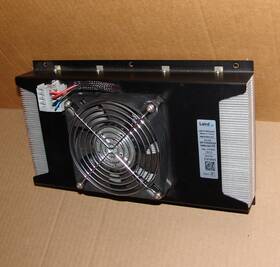
( Brand: Laird Technologies ), ( Manufacturer Part Number: 387000639 ), ( Part Type: Cooler )
Review LAIRD TECHNOLOGIES Thermoelectric Cooler
The **Laird 387000639 Thermoelectric Cooler (TEC)** is a high-performance, precision-engineered module designed for demanding thermal management applications where compact size, reliability, and efficient heat dissipation are paramount. Part of Laird s advanced thermoelectric cooling lineup, this module leverages cutting-edge Peltier technology to deliver precise temperature control with minimal mechanical complexity. Built with a robust **bismuth-telluride (Bi Te ) semiconductor material**, the 387000639 offers exceptional cooling efficiency, capable of maintaining temperature differentials of up to **70 C** (depending on operating conditions and thermal design) while operating silently and without moving parts. Its **ceramic-to-metal (CERMET) bonding** ensures superior thermal conductivity and long-term durability, reducing the risk of delamination or performance degradation over extended use.
Ideal for applications requiring **sub-millimeter cooling**, the 387000639 features a **compact 40mm 40mm 3.7mm footprint**, making it perfectly suited for integration into space-constrained systems such as medical devices, aerospace instrumentation, laser diodes, optical sensors, and high-precision industrial controls. Its **direct-drive design** eliminates the need for additional cooling fans or heat sinks in many applications, while its **low-profile construction** simplifies mounting in tight enclosures. The module is engineered for **high reliability**, with a **mean time between failures (MTBF)** exceeding 50,000 hours under normal operating conditions, ensuring dependable performance in both laboratory and field environments.
For enhanced thermal management, the 387000639 is compatible with a range of **heat sink solutions**, including aluminum or copper finned radiators, and can be paired with **active cooling systems** (such as fans or liquid cooling loops) for even greater cooling capacity in high-heat applications. Its **bidirectional cooling capability** allows for both heating and cooling modes, providing versatility in temperature regulation tasks. Additionally, the module s **low electrical resistance** minimizes power consumption, making it energy-efficient for continuous operation. With **precise temperature control** achievable through integrated driver circuits or external PWM (pulse-width modulation) control, the 387000639 is a versatile solution for applications where thermal stability is critical whether in scientific research, telecommunications, or consumer electronics.
Built to withstand **extended operating lifespans**, the Laird 387000639 is constructed with **high-purity materials** and undergoes rigorous quality assurance testing to ensure consistency and performance. Its **hermetically sealed design** protects against environmental contaminants, making it suitable for use in harsh conditions, including elevated humidity or corrosive atmospheres. Whether used in **optical cooling systems, battery thermal management, or temperature-sensitive electronics**, this thermoelectric cooler delivers **consistent, repeatable performance** with minimal maintenance requirements. For engineers and designers seeking a **highly efficient, space-saving thermal solution**, the Laird 387000639 represents a superior choice combining innovation, durability, and precision cooling in a single, compact module.
The **Laird 387000639** is a thermoelectric cooler (TEC) module designed for precise temperature control in applications such as cooling small electronic components, optical devices, or laboratory setups. Below is a detailed breakdown of its pros and cons, followed by a conclusion and recommendation.
---
### **Pros of the Laird 387000639 TEC Module**
1. **High Performance and Efficiency**
The module is engineered for high cooling power, capable of maintaining stable temperatures in demanding applications. It uses advanced thermoelectric materials to achieve efficient heat transfer from a small footprint, making it suitable for compact systems.
2. **Compact and Lightweight Design**
With dimensions of approximately 40 mm x 40 mm, it is well-suited for applications where space is limited. Its lightweight nature reduces mechanical stress on mounting surfaces.
3. **Precision Temperature Control**
Thermoelectric coolers provide fine-tuned temperature regulation, which is critical for sensitive components like lasers, sensors, or medical devices. The module can maintain temperatures within a narrow range when paired with a proper driver and heat sink.
4. **No Moving Parts**
Unlike mechanical coolers (e.g., Peltier fans or compressors), this TEC has no moving parts, reducing wear and tear, noise, and maintenance requirements. This makes it ideal for long-term, low-maintenance applications.
5. **Wide Operating Temperature Range**
The module can operate effectively across a broad temperature spectrum, typically from around -40 C to 100 C, depending on the specific configuration and cooling setup. This versatility allows it to be used in diverse environments.
6. **Fast Response Time**
TECs respond quickly to changes in temperature, making them suitable for applications requiring rapid thermal adjustments, such as thermal cycling or dynamic cooling.
7. **Compatibility with Custom Solutions**
The module can be integrated into custom cooling systems, including heat sinks, fans, and thermal interface materials, to optimize performance for specific use cases.
8. **Reliability and Longevity**
When operated within specified parameters, TECs are known for their durability. The absence of fluids or moving parts minimizes failure points, contributing to a longer operational lifespan.
9. **Silent Operation**
Since there are no fans or motors, the module operates silently, which is advantageous for noise-sensitive applications like audio equipment or laboratory setups.
10. **Versatility in Applications**
It can be used in various fields, including:- **Electronics cooling** (e.g., power amplifiers, RF components).
- **Optical systems** (e.g., cooling lasers or detectors).
- **Medical devices** (e.g., maintaining temperature-sensitive samples).
- **Automotive and aerospace** (for temperature stabilization in compact spaces).
---
### **Cons of the Laird 387000639 TEC Module**
1. **Limited Cooling Capacity Without a Heat Sink**
While the module itself is efficient, its cooling performance heavily depends on the external heat sink and thermal interface materials. Without proper heat dissipation, the module may struggle to maintain low temperatures, especially in high ambient heat conditions.
2. **Requires Additional Components**
To achieve optimal performance, the module must be paired with:- A heat sink (to dissipate heat from the backside).
- A thermal interface material (e.g., thermal grease or pads) to improve contact between the TEC and heat sink.
- A driver circuit (e.g., a TEC controller) to regulate current and temperature.
These additional components add to the cost and complexity of the system.
3. **Energy Consumption**
TECs consume electrical power to create a temperature difference. While they are energy-efficient compared to mechanical coolers, they still require a steady power supply, which can contribute to operational costs, especially in continuous-use applications.
4. **Temperature Gradient Limitations**
The cooling effect is localized to the junction where the TEC is applied. If the component being cooled is large or unevenly shaped, achieving uniform temperature distribution may require additional design considerations.
5. **Sensitivity to Ambient Conditions**
Performance degrades in high ambient temperatures or when the heat sink cannot dissipate heat effectively. In extreme cases, the module may struggle to maintain the desired temperature without additional cooling (e.g., active cooling of the heat sink).
6. **Cost of Auxiliary Components**
High-quality heat sinks, thermal interface materials, and TEC drivers can add significant cost to the overall system. For example, a well-designed heat sink may cost more than the TEC module itself.
7. **Not Suitable for High Heat Loads**
If the application generates excessive heat (e.g., high-power electronics), a single TEC module may not be sufficient. Multiple modules or hybrid cooling solutions (e.g., combining with a fan) may be necessary.
8. **Potential for Thermal Runway**
If the system fails (e.g., due to power supply issues or poor thermal management), the TEC could overheat, leading to permanent damage. Proper safeguards (e.g., overcurrent protection) are essential.
9. **Limited Lifespan Under Extreme Conditions**
While TECs are durable, prolonged operation at maximum capacity or in harsh environments (e.g., high vibration, temperature cycling) can reduce their lifespan. The module s longevity depends on adherence to manufacturer guidelines.
10. **Skill Required for Integration**
Proper installation and integration require knowledge of thermal management, electrical connections, and system design. Poor implementation can lead to inefficiencies or failures.
---
### **Conclusion**
The **Laird 387000639 TEC module** is a robust and versatile cooling solution for applications requiring precise, compact, and reliable temperature control. Its advantages such as no moving parts, fast response, and compatibility with custom systems make it ideal for sensitive electronic, optical, or laboratory applications. However, its effectiveness depends heavily on the supporting components (heat sink, thermal interface, driver), which can add complexity and cost. Additionally, it is not a standalone solution for high-heat applications and requires careful design to avoid performance bottlenecks.
For users with moderate cooling needs, a well-designed system around this TEC can deliver excellent results. However, those dealing with high heat loads or complex thermal management challenges may need to supplement it with additional cooling methods or consider alternative solutions like liquid cooling or mechanical coolers.
---
### **Recommendation**
**Buy the Laird 387000639 if:**- You need a compact, silent, and precise cooling solution for low-to-moderate heat loads.
- Your application involves sensitive components (e.g., lasers, sensors, or electronics) where temperature stability is critical.
- You are willing to invest in complementary components (heat sink, thermal interface, driver) to maximize performance.
- Your system operates in controlled environments where ambient temperatures are manageable.
**Avoid or reconsider if:**- Your application generates excessive heat that cannot be dissipated with passive cooling (e.g., a single heat sink).
- You lack the expertise or resources to design and implement a proper thermal management system.
- Cost is a major constraint, as the total system cost (including auxiliary components) may exceed expectations.
- You require cooling for large or irregularly shaped components without additional design work.
**Alternative Considerations:**- For higher cooling demands, explore multi-stage TEC modules or hybrid cooling solutions (e.g., TEC fan).
- If your application involves high vibration or extreme conditions, verify the module s compatibility with your environment.
- Consult Laird s technical documentation or application notes for guidance on selecting appropriate heat sinks and drivers for your specific use case.
In summary, the **Laird 387000639** is a strong choice for targeted cooling applications where its strengths align with your needs, provided you address its limitations with thoughtful system design.
Details:
Removed from a working operation. Happy buying!, Shipping Handling US. One Laird Technologies thermoelectric cooler p/n 387000639, 24 CDC.
part #: 387000639 price
- $100.00
specifications temperaturcontr:
- brand: Laird Technologies
- mpn: 387000639
- part type: Cooler
returns temperaturcontr:
- policy: No Returns
general temperaturcontr:
- condition: Used
- PLCs HMIs > PLC Peripheral Modules > PLC Temperature Modules
seller temperaturcontr:
- rating: 100.0%
- city: Dayton, Ohio
- # reviews: 5663
offer temperaturcontr:
- options: Ship-to-home
- availability: In Stock
- quantity: 1
- sold: 0
- started: May 1, 2026
payments temperaturcontr:
- wallet: Paypal
- other
- credit card: Discover
shipping temperaturcontr:
- cost: $17.00
- type: Fixed
- transit: 5-11 Days
- carrier: USPS
- class: Expedited
- service: USPS Priority Mail
Laird Technologies 387000639 Is Similar To:
- Laird 145001 Thermoelectric Assemblies Temp Cntrl Multi Pid Progr 10-30v (42.6% similar) This item was pulled from a working environment...(February 8th, 2024)
- Laird Technologies Ll-210-24-00-00-00 Ll-210-24 Thermoelectric Cooler (73.9% similar) Happy buying!, shipping handling us. Removed from a working operation. One Laird Technologies thermoelectric cooler, p/n LL-210-24-00-00- 24 CDC...(May 1st, 2026)